
Drilling and tapping at Off Site Manufacturing runs on CNC machining centers with genuine rigid-tapping capability, inside the same IATF 16949 quality management system that governs the rest of the OSM CNC program. The program manages the three dominant failure modes in production tapping: torque overload, chip packing in blind holes, and synchronization error between spindle and feed.
This page explains why tapping is the most constrained cycle on a CNC drawing, how Off Site’s team builds the control-plan defaults (pre-drill, tap geometry, coolant, rigid-tapping synchronization, in-process inspection), and when to specify rigid tapping on production drawings.
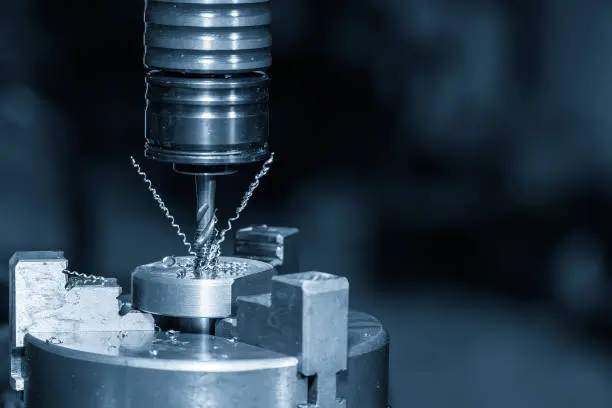
Drilling is forgiving. The operator can choose a speed and a feed independently, which means the same drill in the same hole can be run slower through a harder spot, or faster through a softer one, without damaging the part. Tapping does not offer that choice.
The feed rate per revolution of a tap is exactly equal to the thread pitch of the tap. A quarter-twenty tap advances 0.050 in. per revolution. A metric M8x1.25 tap advances 1.25 mm per revolution. That is not a programming default; it is a geometric constraint of what a thread is.
The consequence is that tapping removes the compensating variable that drilling uses to handle material variation, tool wear, and chip behaviour. Every small misalignment between what the spindle wants to do and what the feed axis is doing translates directly into axial tension or compression on the tap body. Accumulate enough of it, and the tap fails inside the hole.
Rigid tapping is the CNC technique that addresses this by synchronizing spindle rotation and axial feed through the control, replacing floating tap holders and passive compensation. The technique is the baseline for production internal-thread work in precision shops.
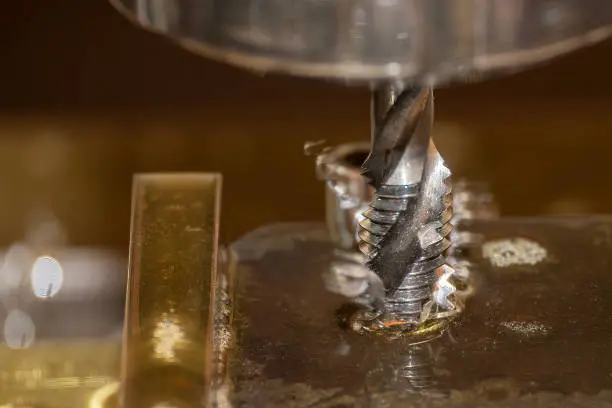
Published engineering sources identify three dominant failure modes in rigid tapping that interact and compound. A disciplined drilling and tapping program addresses each one directly, and Off Site’s team builds each into the control plan per part.
Undersized pre-drilled holes, aggressive speeds, and material work-hardening all drive cutting torque above what the tap body can carry. The failure is sudden and often catastrophic inside the hole.
The countermeasures begin upstream: correct pre-drill diameter for the pitch, correct speed selection for the material and tap geometry, and coolant delivery that reduces friction at the cutting edge.
A blind hole has no exit path for the chip. As the tap advances, the chip has to be evacuated up the tap flutes or broken into manageable pieces, or it accumulates below the tap. When it accumulates, cutting torque spikes.
Countermeasures include spiral-flute taps that pull chips up and out, peck-cycle programming that retracts to clear chips, and coolant pressure and flow selected to flush the bore.
Rigid tapping depends on exact synchronization between spindle rotation and axial feed. Small errors create axial tension or compression that the tap cannot accommodate. Modern CNCs manage synchronization inside the control, but the machine has to have the capability and the program has to use it.
The three failure modes compound. Poor chip evacuation raises torque, and raised torque amplifies the effect of small synchronization errors. Treating tapping as a primary control-plan concern, rather than a background operation, is what keeps taps intact in production.
Off Site’s drilling and tapping program runs inside the same IATF 16949 quality management system that governs the rest of the OSM CNC program. That means every lot ships with documentation satisfying IATF, AS, and DoD requirements, and the paperwork is already compatible with the audit process your own customer runs on you.
Inside that framework, Off Site’s team applies the following defaults on production tapping:
For parts where internal threads are co-located with prismatic features, the program runs alongside OSM’s CNC milling services on the same machining center in a single setup. Where location accuracy on the tap pattern matters, the plus or minus 0.0005 in. capability OSM holds on its machining centers protects hole-to-hole relationships that loose tapping programs drift past. For parts that combine tapping with cylindrical bores that require finishing beyond the drill, OSM’s metal honing services is the adjacent capability.
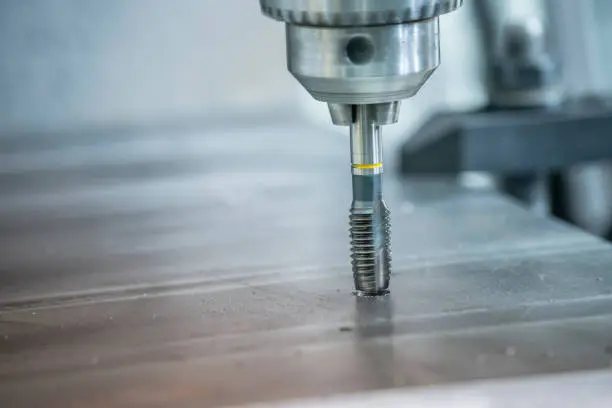
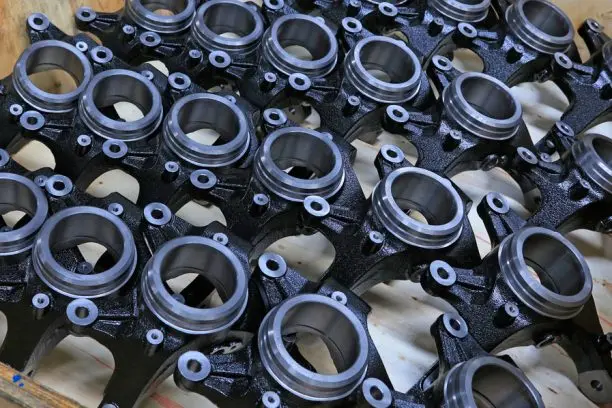
Representative features include threaded bosses, cross-drilled and tapped holes for fasteners and fluid passages, blind tapped holes in prismatic housings, tapped journal end-caps, and deep-hole drilling for cooling passages and hydraulic lines.
For program-level framing of how drilling and tapping fits with the rest of the CNC capability, the pillar CNC machining services page covers the full program.

Specify rigid tapping when one or more of the following is true:
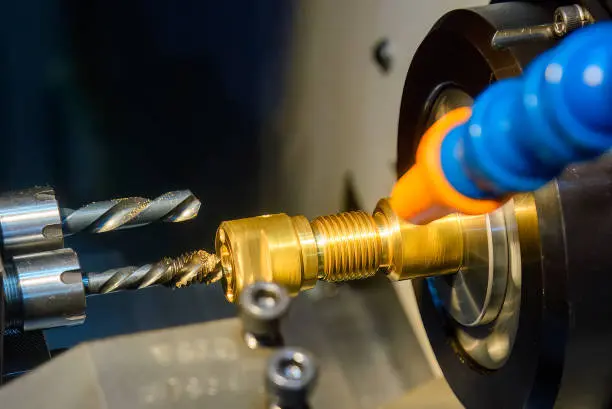
Rigid tapping synchronizes spindle rotation and axial feed through the CNC control, which removes the passive compensation that a floating holder relies on. On modern CNCs with genuine rigid-tapping capability, the result is more consistent thread form, better position and perpendicularity control, and fewer tap breakages caused by synchronization mismatch
Chip packing is the most common cause. In a blind hole, chips cannot evacuate naturally, so they accumulate under the tap and drive cutting torque up. The mitigations are spiral-flute taps that pull chips up and out, peck-cycle programming that retracts to clear chips, and coolant chemistry and delivery selected to flush the bore.
Yes. Every lot OSM ships carries documentation that satisfies IATF, AS, and DoD requirements. The quality management system is IATF 16949 certified, and the drilling and tapping program runs inside that framework with the AIAG Core Tools.
Yes. On a machining center, drilling and tapping often run in the same cycle as milled features on the same part, which eliminates re-fixturing error and protects the hole-to-feature relationships on the drawing.
The drilling and tapping program runs against MRP-integrated production schedules for OEM and Tier 1 programs with ongoing volume. Send the drawing with thread callouts, the material and heat-treat state, and through-hole versus blind-hole distinctions; Off Site’s team returns tap selection, pre-drill confirmation, and a coolant strategy before the quote.
Three pieces of information move a new drilling and tapping program from inquiry to control plan: the drawing with thread callouts and hole patterns, the material and heat-treat state, and any through-hole versus blind-hole distinctions that affect tap geometry.
With those in hand, Off Site’s team can map each hole to the right tap, the right coolant, and the right inspection cadence before the first production lot.
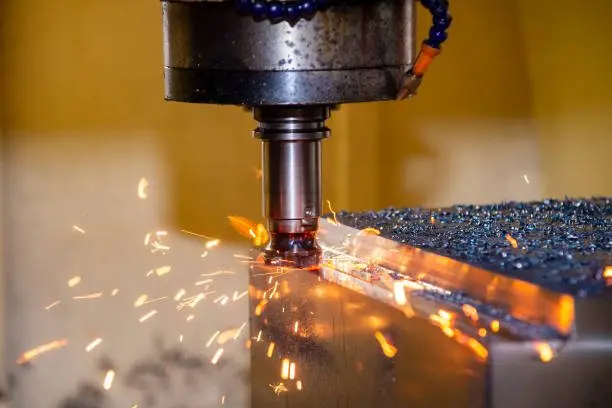
Prismatic geometry, cross-axis features, pockets, and profiled surfaces on iron, steel, aluminum, and brass. Milling is the process that produces what turning cannot reach, with control-plan discipline around chatter, and tool deflection.
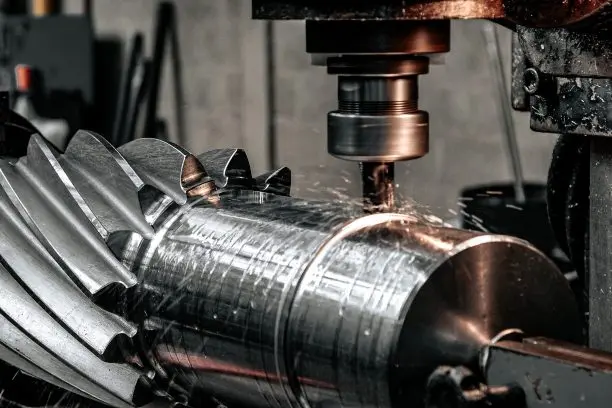
Cylindrical features, shafts, bushings, and journals on live-tool and multi-axis lathes. Turning is where OSM routinely holds concentricity and roundness better than 0.0005 in. TIR, with surface finishes in the Ra 0.8 to 3.2 micrometer band.
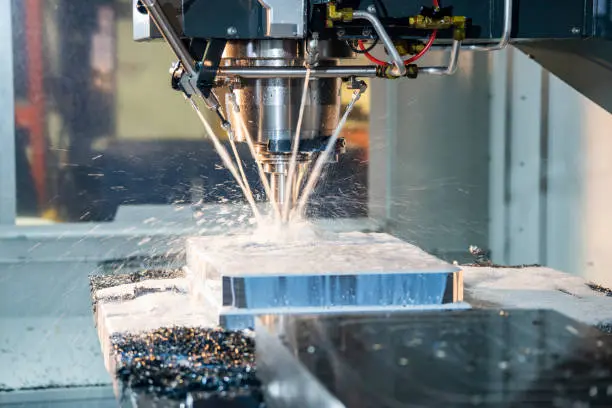
The tight-tolerance band, the thermal control, and the inspection cadence that hold plus or minus 0.0005 in. across a shift and across a program.

Holes and internal threads on platforms with genuine rigid-tapping capability. Where tap feed per revolution equals pitch and torque overload, chip packing, and synchronization error are actively managed rather than caught after the fact.
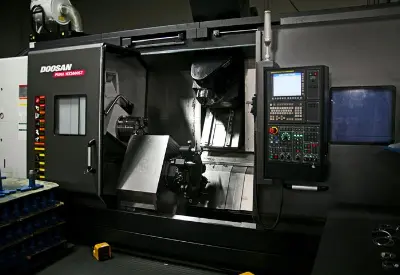
Program-management contract machining for OEMs and Tier 1 suppliers who need sourcing, machining, finishing, and JIT delivery handled as one relationship with MRP-grade information flow.
Multi-year OEM program support: APQP on new programs, PPAP against AIAG Levels 1 through 5, IATF documentation on every lot, and the program discipline that holds cost across model years.