OEM manufacturing at Off Site Manufacturing is a multi-year program relationship built around APQP execution against the AIAG 3rd edition (published March 2024), PPAP submission against AIAG Levels 1 through 5, and IATF 16949 documentation on every lot. The program wraps sourcing, precision CNC machining to plus or minus 0.0005 in. where applicable, finishing and coating, sub-assembly, and JIT delivery into a single MRP-integrated relationship.
This page covers who the program applies to, the APQP-PPAP-IATF discipline behind a multi-year OEM program, what OSM delivers across the program scope, the crank pulley program as attested proof, and what to verify of any supplier being evaluated for OEM program work.
OEM manufacturing at program-management depth is relevant to specific roles inside an OEM or Tier 1 program:
For the full market scope see OSM industries page. For program-management framing applied to contract work more broadly, see contract machining services page.

OEM manufacturing is a joint program between the OEM’s design and program-management function and a supplier who can absorb the product into a PPAP-capable control plan without breaking the program schedule.
The supplier’s work begins months before the first production part leaves the plant: reviewing drawings for manufacturability, feeding DFMEA and PFMEA analyses, developing tooling, building control plans, running process-capability studies, and preparing a PPAP submission for OEM quality sign-off.
Because the launch consequences sit with the program manager rather than the buyer, OEM sourcing decisions are typically made on program-management evidence (APQP close, clean PPAP, held cost across model years) rather than unit price alone.
The discipline that protects an OEM program from launch risk has three layers, each with published industry standards behind it.

The AIAG Advanced Product Quality Planning framework, now in its 3rd edition (published March 2024), runs a new program through one pre-planning stage and five concurrent phases: plan and define, product design and development, process design and development, product and process validation, and feedback with corrective action.
The 3rd edition adds explicit attention to sourcing, change management, program metrics, risk mitigation, and gated management. For an OEM program, APQP is the project-management backbone that keeps design, tooling, process capability, and PPAP submission in lockstep.
The AIAG Production Part Approval Process defines five submission levels, with Level 3 the default. Level 1 requires the Part Submission Warrant only. Level 3 requires the PSW, product samples, and complete supporting data: the full dimensional layout, process flow, control plan, PFMEA, MSA, process capability study, and fifteen other elements. Level 5 is Level 3 plus on-site review of the full package at the supplier’s facility.
All 18 PPAP elements apply regardless of level. The level dictates delivery, not content.

IATF 16949 is the quality management system standard that governs automotive production and service parts. IATF 16949 sits on top of ISO 9001 and adds clauses on product safety, supplier development, control of outsourced processes, traceability, and mandatory use of the AIAG Core Tools.
The certification runs on a three-year cycle with annual surveillance audits. Off Site Manufacturing is IATF 16949 certified and produces documentation that satisfies IATF, AS, and DoD requirements, so the audit artifacts travel with the program.
Off Site Manufacturing’s OEM program scope covers the full operational stack that an OEM program needs from a production supplier:
The crank pulley program Off Site Manufacturing runs for a heavy-duty commercial truck customer is the publicly shareable proof of the OEM program discipline. Three attested outcomes define the program:
On a rotating, balanced component, those outcomes indicate that geometry, balance grade, material selection, and assembly tolerancing were correct at launch and stayed correct through service, that APQP closed cleanly into a defensible 18-element PPAP submission, and that the process was stable enough to absorb material and labour variance across three model years without re-quote.
Off Site Manufacturing has also recorded zero line stoppages attributed to an OSM part in the past five years across a customer base that includes heavy-duty commercial truck, diesel engine manufacturers, military vehicle components, aerospace, foundry supply chain partners, cooling systems, and water infrastructure and valves. The plant has operated continuously in Chesterfield Township, Michigan for 85-plus years.
Off Site invites any OEM or Tier 1 program team to verify the following of any supplier being evaluated:
The OSM industries page shows where OEM programs already run. For the background on how the rest of the OSM CNC program is organized, start with the pillar CNC machining services page.
APQP, the AIAG Advanced Product Quality Planning framework, is a five-phase structured process for taking a new program from initial planning through product and process validation and into ongoing feedback and corrective action. The 3rd edition, published in March 2024, adds explicit attention to sourcing, change management, program metrics, risk mitigation, and gated management. APQP applies to every new program entering an OEM production environment.
PPAP Level 3 is the AIAG default. It requires the Part Submission Warrant, product samples, and complete supporting data including dimensional results, process flow, control plan, PFMEA, MSA, and process-capability studies. All 18 PPAP elements apply regardless of level; the level dictates which elements are delivered to the customer versus retained at the supplier.
OEM manufacturing is a multi-year program relationship with APQP on new programs, PPAP against AIAG levels the OEM specifies, held cost across model years, and IATF 16949 documentation traveling with every lot. Contract manufacturing can run on the same discipline at the program-management end of the spectrum or can be transactional at the other end. OSM runs at the program-management end in both cases.
It means the supplier absorbed material and labour variance across a multi-year program without re-quoting. That is only possible when the process is stable and the program-management discipline is in place, because a supplier cannot absorb variance indefinitely on a process that is not under control.
Published OEM supplier quality manuals describe an initial 8D containment report within 24 hours of a Level 1 notification, a final 8D within 10 working days or an interim report with a schedule, and a minimum 30-day quarantine before containment exit. During containment, sorting, rework, and premium-freight costs typically accrue to the supplier, and PPM chargebacks can be assigned based on risk and severity.
Send the drawing package, the program timeline, and the PPAP level and IATF documentation requirements your OEM customer specifies. Off Site’s team returns APQP mapping, a PPAP path, process-capability direction on the critical characteristics, and an MRP integration plan before the quote.
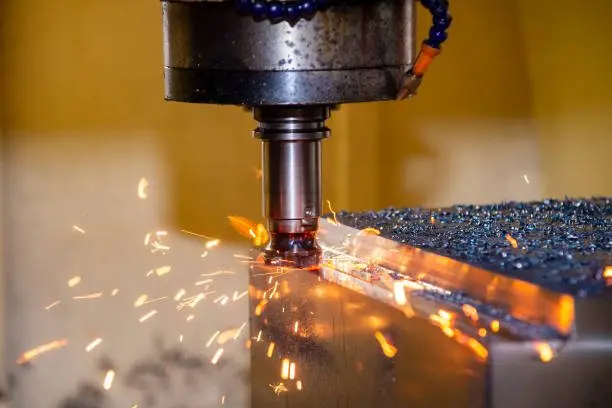
Prismatic geometry, cross-axis features, pockets, and profiled surfaces on iron, steel, aluminum, and brass. Milling is the process that produces what turning cannot reach, with control-plan discipline around chatter, tool deflection, and thermal growth.
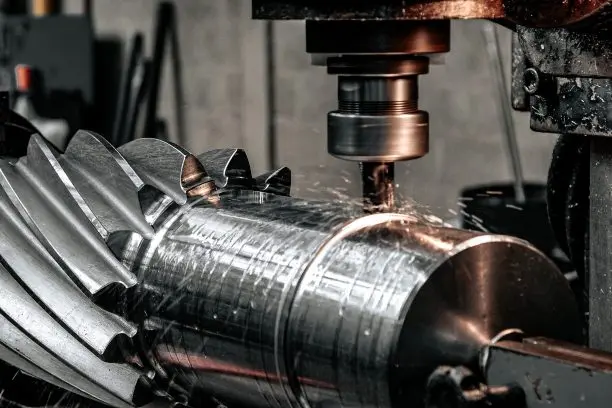
Cylindrical features, shafts, bushings, and journals on live-tool and multi-axis lathes. Turning is where OSM routinely holds concentricity and roundness better than 0.0005 in. TIR, with surface finishes in the Ra 0.8 to 3.2 micrometer band.
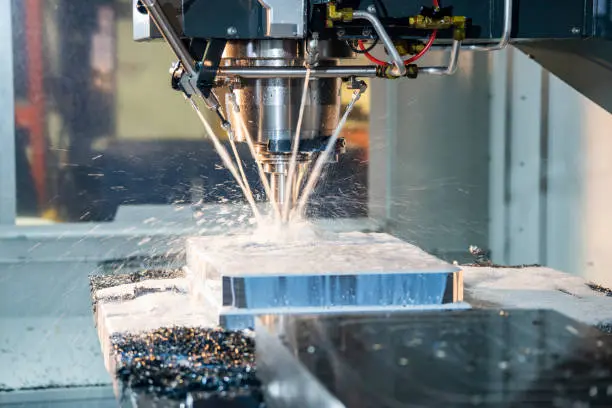
The tight-tolerance band, the thermal control, and the inspection cadence that hold plus or minus 0.0005 in. across a shift and across a program.

Holes and internal threads on platforms with genuine rigid-tapping capability. Where tap feed per revolution equals pitch and torque overload, chip packing, and synchronization error are actively managed rather than caught after the fact.
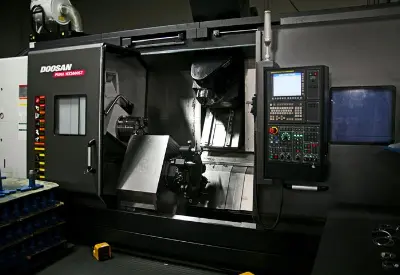
Program-management contract machining for OEMs and Tier 1 suppliers who need sourcing, machining, finishing, and JIT delivery handled as one relationship with MRP-grade information flow.
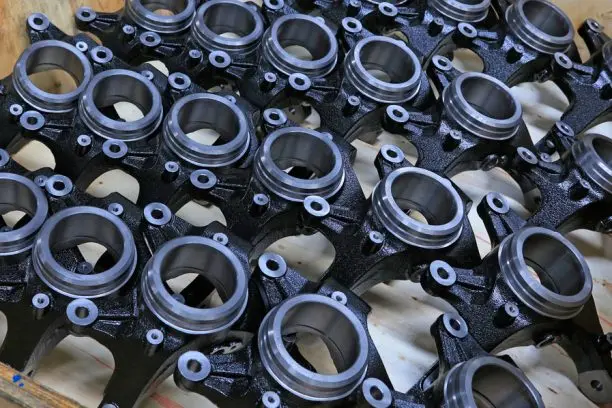
Multi-year OEM program support: APQP on new programs, PPAP against AIAG Levels 1 through 5, IATF documentation on every lot, and the program discipline that holds cost across model years.
If you have a new program heading into APQP kickoff and you are evaluating sourcing options, a direct conversation is the fastest path. Send the drawing package, the program timeline, and the PPAP level and IATF documentation requirements your OEM customer specifies. Off Site’s team will come back with APQP mapping, a PPAP path, process-capability direction on the critical characteristics, and an MRP integration plan.